
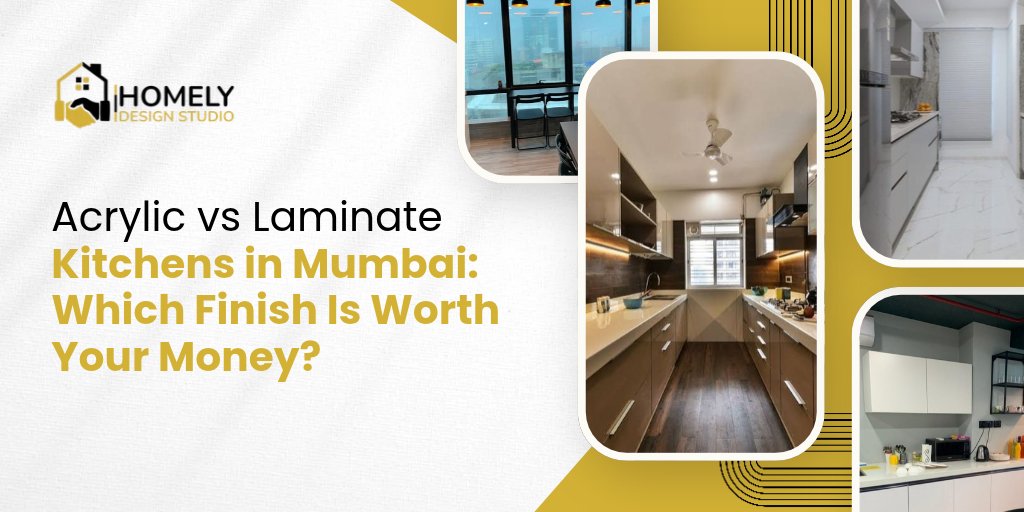
Choosing kitchen cabinet finishes is one of the most important decisions when designing or renovating a kitchen. The finish affects more than appearance. It also influences cleaning, maintenance, durability, and the overall project cost. Two popular options among Indian homeowners are acrylic and laminate. Both offer different benefits, but which one gives you better value for your money?
For homeowners in Mumbai, the decision requires extra thought. Daily cooking, oil splashes, humidity, limited space, and frequent cleaning can affect how kitchen surfaces look over time. A finish that looks beautiful in a showroom may not be the most practical choice for your everyday routine.
If you are planning a modern kitchen interior design, understanding the differences between acrylic and laminate can help you invest wisely. Let’s compare both options based on appearance, cost, maintenance, durability, and suitability for Mumbai homes.
1. Understanding Acrylic and Laminate Kitchen Finishes
Before comparing the two, it helps to understand how each finish is made and what makes it different.
What Is an Acrylic Kitchen Finish?
Acrylic is a decorative surface material known for its smooth, high-gloss appearance. It is applied to a suitable cabinet substrate, commonly MDF, to create a reflective and polished finish.
Its mirror-like surface can make a kitchen look brighter and more contemporary. Acrylic is available in several colors, including white, beige, gray, black, and bold shades.
Key Characteristics of Acrylic:
- High-gloss appearance with strong light reflection.
- Smooth and non-porous surface.
- Available in a range of colors.
- Easy to wipe clean during regular maintenance.
- Often positioned as a premium cabinet finish.
- Can show fingerprints, smudges, and scratches more visibly.
Acrylic is a popular choice for homeowners who want a sleek kitchen with a clean, modern appearance.
What Is a Laminate Kitchen Finish?
Laminate is a decorative surface made by pressing layers of paper and resin together. It is applied to a suitable base material to create a finished cabinet surface.
One of its biggest advantages is variety. Laminate is available in glossy, matte, textured, wood-grain, and stone-inspired designs.
Key Characteristics of Laminate:
- Available in a wide range of colors and textures.
- Generally more budget-friendly than acrylic.
- Offers practical resistance to everyday wear, depending on its grade.
- Requires relatively simple cleaning.
- Suitable for different kitchen styles.
- Edges may peel or chip if the material or installation quality is poor.
Laminate is a practical choice for homeowners who want attractive cabinets without spending heavily on premium finishes.
2. Which Finish Looks More Luxurious?
If visual appeal is your main priority, acrylic has an advantage in creating a polished, reflective appearance.
Its glossy surface reflects light and can make a compact kitchen feel brighter. This can be particularly useful in Mumbai apartments where kitchen spaces may have limited natural light.
Acrylic works well with:
- Sleek handleless cabinet designs.
- Minimalist layouts.
- Neutral color combinations.
- Modern lighting arrangements.
- Contemporary kitchen islands.
However, luxury does not always mean high gloss.
Laminate can also create an elegant appearance through matte textures, wood-grain patterns, and stone-inspired designs. A matte beige or natural wood finish can give a kitchen a warm, understated look.
For example, a combination of wood-textured laminate cabinets and a light-colored countertop can create a sophisticated kitchen without the cost of using premium finishes everywhere.
Which Should You Choose?
- Choose acrylic if you prefer a glossy, polished, and contemporary appearance.
- Choose laminate if you want more flexibility with textures, patterns, and understated finishes.
The overall kitchen design matters just as much as the cabinet material. Lighting, countertops, hardware, backsplashes, and color coordination all contribute to the final appearance.
3. Which Material Is More Durable for Everyday Cooking?
A kitchen experiences more daily activity than many other areas of the home. Cabinet surfaces come into contact with cooking ingredients, oil splashes, cleaning products, moisture, and frequent handling.
Both acrylic and laminate can perform well when good-quality materials are selected and installed correctly. However, their performance depends on the product grade, substrate, edge finishing, and maintenance.
Acrylic Durability
Acrylic provides a smooth surface that is generally easy to clean. However, glossy surfaces can show scratches and fingerprints, especially in areas that receive frequent contact.
Its edges also need proper finishing to reduce the risk of damage.
Laminate Durability
Good-quality laminates can handle regular kitchen use and offer practical resistance to everyday wear. Textured or matte options may also make minor marks less noticeable.
However, poorly bonded laminates can peel at the edges, particularly when exposed to moisture or heat over time.
What Matters More Than the Finish?
Regardless of your choice, pay attention to:
- The quality of the base material.
- Proper edge sealing.
- Adhesive and installation quality.
- Distance from direct heat sources.
- Protection from standing water.
- Suitable cleaning practices.
A premium finish installed on a poorly constructed cabinet may not perform as expected. Always evaluate the complete cabinet system rather than judging the surface alone.
4. Which Finish Is Easier to Maintain in Mumbai Kitchens?
Mumbai kitchens often deal with humidity, regular cooking, oil splashes, and limited ventilation in some apartment layouts. These conditions make maintenance an important part of material selection.
Acrylic and laminate both have relatively easy cleaning requirements, but their surfaces respond differently to everyday marks.
Maintaining Acrylic Cabinets
Acrylic surfaces can usually be cleaned with a soft microfiber cloth and a mild cleaning solution.
Keep these points in mind:
- Wipe fingerprints and smudges regularly.
- Avoid abrasive scrubbers.
- Do not use harsh cleaning chemicals.
- Clean oil splashes before they become difficult to remove.
- Use a soft cloth to reduce the risk of surface scratches.
Its glossy appearance looks attractive, but it may require more frequent wiping to maintain a spotless finish.
Maintaining Laminate Cabinets
Laminate cabinets are generally straightforward to clean. A damp microfiber cloth and mild soap are usually sufficient for routine maintenance.
Follow these precautions:
- Avoid allowing water to collect around cabinet edges.
- Clean spills promptly.
- Do not use abrasive cleaning pads.
- Avoid excessive moisture around joints.
- Use suitable products recommended by the manufacturer.
Neither finish should be treated as completely waterproof. Proper installation, edge protection, ventilation, and plumbing maintenance remain important.
For busy households that cook frequently, a practical finish with manageable cleaning requirements may offer better everyday value than one selected purely for appearance.
5. Which Option Is More Budget-Friendly?
Budget is often the deciding factor when homeowners compare acrylic and laminate.
Laminate is generally the more affordable option. Acrylic usually costs more because of its material and finishing requirements. However, the final price depends on the product grade, cabinet construction, design complexity, and installation.
Why Acrylic May Cost More
- Premium high-gloss surface material.
- Specific substrate and finishing requirements.
- Careful handling during installation.
- Additional attention to surface protection.
- Design preferences that may involve customized detailing.
Why Laminate Can Be More Economical
- Wider availability across different price ranges.
- Multiple options for budget-conscious projects.
- Practical designs without requiring premium finishes.
- Flexibility to combine different textures and patterns.
When comparing quotations, do not focus only on the price per square foot. Ask what is included in the estimate.
Check whether the quotation covers:
- Cabinet carcass material.
- Shutters and surface finishes.
- Hardware and hinges.
- Edge banding and finishing.
- Installation and labor.
- Transportation and other applicable charges.
A lower quotation may exclude important components or use different material specifications. Compare equivalent products before making a decision.
6. Can You Combine Acrylic and Laminate in One Kitchen?
Yes. You do not have to use the same finish for every cabinet. Combining acrylic and laminate can help balance appearance, practicality, and budget.
This approach allows you to use premium finishes where they create the most visual impact and more economical materials in less prominent areas.
For example:
Upper cabinets: Use glossy acrylic to create a bright and reflective appearance.
Lower cabinets: Choose textured or matte laminate to create contrast and reduce the visibility of everyday marks.
Tall storage units: Use wood-finish laminate to introduce warmth and visual depth.
Kitchen island: Consider a contrasting finish that makes the island a focal point.
This combination can work particularly well in open-plan Mumbai apartments where the kitchen is visible from the dining or living area.
However, the two finishes should complement each other. Choose colors and textures that create a balanced appearance rather than making the kitchen feel visually disconnected.
How to Choose the Right Kitchen Interior Designer in Mumbai
Selecting cabinet finishes is only one part of kitchen planning. You also need to consider storage, workflow, ventilation, lighting, appliances, and the available space.
An experienced kitchen interior designer near me can help you compare materials and understand how each option will work in your home.
Before hiring a designer, consider the following:
- Kitchen experience: Review previous modular kitchen projects.
- Material knowledge: Ask about acrylic, laminate, countertops, and cabinet construction.
- Space planning: Check how the designer approaches storage and movement.
- Budget transparency: Request an itemized estimate with material specifications.
- 3D visualizations: Review the proposed design before execution.
- Installation quality: Understand who manages carpentry, finishing, and on-site work.
- Project timeline: Confirm the expected schedule and major milestones.
A professional should understand your cooking habits and storage needs before recommending a finish. For example, a family that cooks frequently may have different priorities from someone who uses the kitchen occasionally.
Homely Design Studio provides kitchen interior design solutions in Mumbai, including modular cabinetry, smart storage, material selection, and premium finishes. Its design process includes consultation, space planning, 3D visualizations, and project execution. Explore its kitchen interior design services to discuss your requirements.
Make the Right Kitchen Finish Investment!
Acrylic and laminate can both create beautiful and functional kitchens, but they serve different priorities. Acrylic is a strong option for homeowners who prefer glossy surfaces and a contemporary appearance. Laminate offers greater variety in textures and patterns while generally remaining more budget-friendly.
For Mumbai homes, the right decision should consider cooking habits, humidity, cleaning requirements, cabinet construction, and available budget. You can also combine both finishes to achieve a balanced result without spending unnecessarily.
Planning a kitchen renovation or designing a new home? Connect with Homely Design Studio to explore suitable materials, compare design options, and create a kitchen that matches your lifestyle and budget.
Frequently Asked Questions
1. Is acrylic more expensive than laminate for kitchen cabinets?
Generally, yes. Acrylic is usually positioned as a more premium finish, while laminate offers options across a wider range of budgets. Actual costs depend on material grade, cabinet construction, and installation.
2. Does acrylic kitchen finish turn yellow over time?
Color stability depends on the acrylic product, its quality, and exposure to sunlight and other environmental conditions. Ask the manufacturer about UV resistance and warranty coverage before purchasing.
3. Can laminate cabinets be used near a kitchen sink?
Yes, but the edges and joints must be properly sealed. Prevent standing water and fix plumbing leaks promptly to protect the cabinet substrate from moisture damage.
4. Which finish is better for a small Mumbai kitchen?
Glossy acrylic can reflect light and make a compact kitchen feel brighter. Light-colored or wood-textured laminate can also work well. The best choice depends on the layout, lighting, and desired appearance.
5. Can I replace laminate with acrylic without changing all my kitchen cabinets?
It may be possible if the existing cabinet structure is suitable and the new finish can be properly applied. A professional should inspect the shutters, substrate, and overall condition before recommending replacement or refacing.