homely design studio

interior designers

NRI interior design services in Mumbai - Homely Design Studio helps you manage your Mumbai home interior project from abroad without a single site visit
Interior Design Studio, interior designers, NRI interior design, NRI interior design services in Mumbai

How to Manage a Mumbai Interior Design Project from Abroad Without a Single Site Visit?

You bought a flat in Mumbai. Or perhaps inherited one from your parents. Maybe you have finally decided to build the home you always promised yourself back in India. The only problem is that you are sitting thousands of kilometres away, in London, Toronto, Dubai, or Singapore, and the thought of managing a full interior design project without being physically present feels like an impossible task. You are not alone. Thousands of Non-Resident Indians face exactly this situation every year. And the good news is that with the right NRI interior design services in Mumbai, not a single site visit is required. Professionals who specialize in remote project management for NRI clients have turned what once seemed like a logistical nightmare into a well-oiled, transparent, and deeply personal process. This guide walks you through exactly how it works, what to expect at every stage, and how to choose a partner who will protect your investment and bring your vision to life, even from the other side of the world. Why Does Managing a Project From Abroad Feel Overwhelming? The concerns NRIs typically raise when considering a home project in Mumbai are completely valid. You cannot inspect materials in person. You cannot walk the site after a day of work. You cannot hold a vendor accountable face to face. And with a different time zone in play, even a phone call requires careful scheduling. Add to this the fear of budget overruns, substandard workmanship, and well-meaning relatives giving conflicting opinions on your behalf, and it is easy to see why many NRIs put off their Mumbai home projects for years, sometimes forever. But the interior design industry has evolved. Established studios now offer dedicated service teams, structured remote workflows, and technology-driven communication that keeps you genuinely in control throughout the project, regardless of where you are physically located. How Does a Mumbai Interior Design Project Work for NRI Clients? Step 1: The Initial Online Consultation Everything begins with a video call. During this first meeting, a dedicated designer assigned to your project takes time to understand your vision, lifestyle preferences, budget, and timeline. This is not a sales call. It is a genuine discovery session where the best NRI interior design teams ask about how you use the space, whether you will be living there full-time or using it as a holiday home, and what design sensibility speaks to you. You are encouraged to share reference images, Pinterest boards, or screenshots of interiors you admire. The more you share at this stage, the more accurately the design will reflect you. After this call, you receive a project brief for review and confirmation before any work begins. Step 2: Floor Plan Sharing and Space Planning You do not need to be in the city to kick off the design process. Simply forward the basic floor plan received from your builder or a scanned copy of the existing layout. The design team takes measurements on-site if needed and begins space planning based on your inputs. Within a week or two, you will receive two to three alternative layout options for your feedback, presented digitally so you can review them at your convenience. This stage sets the functional foundation of your home. How the space flows, where the storage goes, how natural light is maximized, all of this is addressed before a single rupee is spent on materials or execution. Step 3: 3D Design Presentations and Visual Approvals Once a layout is approved, the design team produces detailed 3D renders of each room. This is where remote clients get a powerful advantage: rather than trying to imagine a flat from a 2D drawing, you see a photorealistic visualization of your finished home before work begins. Colours, textures, furniture arrangements, and lighting fixtures are all visible in the render. You review these renders at home, discuss them with your family, and provide feedback. Revisions are made until you are fully satisfied. Nothing moves to execution without your explicit sign-off. This approval stage is the most important checkpoint in the entire project, and reputable design studios never rush it. Step 4: Material Selection and Remote Approvals Choosing finishes and materials is often the part that foreign clients worry about most. How do you pick a laminate colour, a tile pattern, or a fabric for your sofa without touching it? The answer lies in two things: physical samples and expert guidance. Your design team curates a shortlist of materials suitable for Mumbai’s climate, your budget, and your aesthetic preferences. High-resolution photographs and, where possible, short videos of the material swatches are shared with you digitally. For key decisions, some studios mail physical samples to your overseas address. Your designer also provides transparent pricing for each option so you can make informed choices without surprises later. Step 5: Vendor Management and On-Site Execution Once materials are approved and the project contract is signed, execution begins. Your dedicated project manager oversees all vendors, carpenters, electricians, painters, and other trades on your behalf. You never need to coordinate with a single contractor directly. Every instruction flows through the studio. This is where having a trustworthy partner matters most. A good NRI interior design service maintains a vetted network of skilled tradespeople and uses in-house quality checks at every milestone. Work does not progress from one stage to the next until the previous stage meets the agreed standard. Step 6: Regular Progress Updates and Virtual Walkthroughs Transparency is non-negotiable in NRI project management. You should expect weekly photographic updates delivered by email, scheduled video calls where your project manager walks you through the site, and real-time messaging for quick queries and approvals. Some studios go further and offer live video walkthroughs via WhatsApp or Zoom, so you can ask questions in the moment and see exactly what is happening on your site, just as if you were standing in the room yourself. This level of communication replaces the need for site visits and gives you genuine peace of mind. Step

luxury home interior design company in Mumbai
Interior Design Studio, interior designers

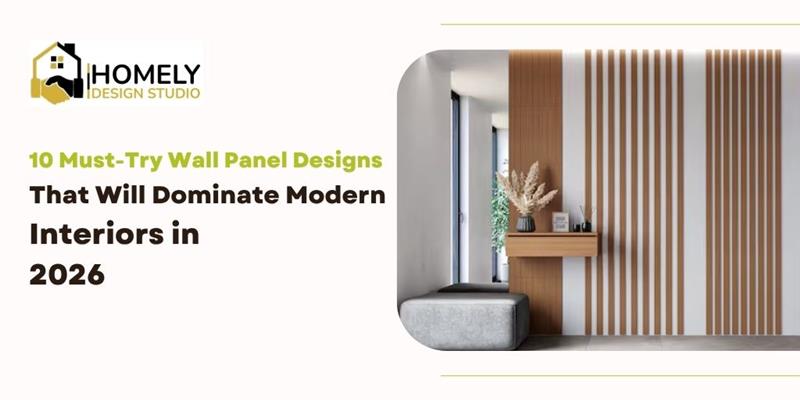
10 Must-Try Wall Panel Designs That Will Dominate Modern Interiors in 2026

Walk into most homes today, and you will notice a persistent problem: blank, lifeless walls that do nothing for the character of a room. Paint fades, wallpaper peels, and plain plaster feels like an afterthought. Wall panels are rewriting that story in 2026. Far from being a passing trend, wall panelling has matured into a full-fledged design discipline. It solves acoustic issues, adds architectural depth, conceals imperfections, and above all, transforms how a space feels to live in. Whether you are designing a luxury penthouse or freshening up a compact apartment, the right wall panel makes your interior work harder and look better. This guide covers the 10 wall panel designs that leading interior designers, architects, and interior design studios are installing right now, complete with expert tips, material insights, and clear answers to the questions homeowners ask most. 10 Wall Panel Designs Reshaping Modern Interiors Fluted ones feature vertical grooves that run in rhythmic repetition. They have dominated luxury interiors since 2024, and in 2026, they show no sign of slowing down. What makes them timeless is their architectural honesty: the pattern creates shadow lines that add visual depth without the need for art or décor. They work beautifully in wood veneer, MDF lacquer, stone composite, and even powder-coated metal. Designer Tip: Use fluted panels floor-to-ceiling in a living room to visually elongate ceiling height. Pair warm walnut fluting with matte brass hardware for a premium, cohesive look. The Japandi aesthetic is a fusion of Japanese minimalism and Scandinavian function. It has found its truest expression in wall panels for 2026. Think rough-sawn timber, limewash plaster sheets, handmade clay tiles, and textured concrete boards. The beauty is intentionally imperfect. These solve the problem of too-polished, too-cold that many modern homes suffer from. It injects warmth and story into blank walls without clutter. Best For: Bedrooms, meditation rooms, and entryways where calm and grounding are the goal. Combine with natural linen drapes and low-profile furniture. Three-dimensional sheets have evolved far beyond the chunky honeycomb tiles of a decade ago. In 2026, CNC-precision geometric reliefs in gypsum, MDF, and lightweight polyurethane create dramatic shadow-play that changes with the light throughout the day. A single accent wall in a drawing room, dining space, or behind a bed headboard becomes the room’s undeniable focal point. It eliminates the need for expensive art installations. Problem Solved: If a room feels flat and uninspiring despite good furniture, a 3D relief panel instantly adds dimension and a sense of luxury. Soft wall panels are no longer limited to home theatres. In 2026, fabric-upholstered in boucle, velvet, linen, and textured weaves is appearing in living rooms, bedrooms, and even luxury dining rooms. Beyond aesthetics, these deliver genuine acoustic performance. They absorb sound, reduce echo, and make spaces feel intimate. They are also perfect for rental apartments where drilling into walls is restricted. Practical Bonus: Upholstered panels can be installed as free-standing or modular systems—no permanent wall alterations required. Applied finishes have returned with a vengeance. Venetian plaster sheets are applied in multiple translucent layers, burnished to a soft sheen. This creates a depth and luminosity that no paint can replicate. Limewash finishes, on the other hand, give an aged, European villa quality that ages beautifully. Both finishes are low-VOC, breathable, and anti-microbial, making them as responsible as they are beautiful. Interior Design Insight: These are frequently specified by interior design studios for high-end residential projects because they photograph beautifully and hold their value over time. Eco-conscious design is no longer a compromise; it is the aspiration. Reclaimed wood panels sourced from old furniture, demolished buildings, or certified sustainable forests bring irreplaceable character: grain patterns, knots, and natural colour variations that factory-made materials cannot imitate. Cork panels, meanwhile, offer extraordinary thermal and acoustic insulation in a material that is harvested without cutting trees. Who Needs This: Homeowners who want a unique, one-of-a-kind wall story with a lower environmental footprint and the provenance to back it up. The most show-stopping wall panel trend of 2026 is thin-cut natural stone — onyx, alabaster, and quartzite backlit with warm LED technology. When light passes through these semi-translucent slabs, the natural veining glows like stained glass. They are the ultimate expression of luxury in a bar cabinet, master bedroom feature wall, or entrance lobby. The effect is simply not achievable with any synthetic material. Design Reality: These require structural planning and experienced installation. Always work with a professional interior design service to specify the right stone thickness and LED system. Micro-cement panels deliver the cool, industrial refinement of concrete without the weight or structural constraints. This year, they are being used across residential and commercial interiors alike as bathroom feature walls, kitchen splashbacks, or living room accents. They create a monolithic quality that reads as calm, confident, and architectural. They are also fully waterproof when correctly sealed. Styling Tip: Contrast the cool grey of micro-cement with warm-toned wood flooring and ambient lighting to balance the industrial with the inviting. Laser-cut screens in brass, corten steel, and powder-coated aluminium are one of the most versatile panel types available. Used as room dividers, feature walls, staircase backdrops, or balcony privacy screens, their precision-cut geometric or organic patterns create intricate shadow effects that animate a space throughout the day. Custom patterns, including traditional motifs reinterpreted in modern form, are increasingly popular in premium residential interiors. Dual Function: They solve two problems at once. They create visual interest while providing privacy or zoning between spaces. The future of wall panels is intelligent. In 2026, sheets that integrate LED lighting, wireless charging pads, embedded sound systems, and even e-ink digital art displays are entering high-end residential projects. These are not gimmicks; they represent the convergence of architecture and technology, where the wall becomes a functional, interactive surface. Concealed behind premium finishes like leather, fabric, or lacquer, the technology remains invisible until needed. Forward Thinking: When undertaking a full home renovation, pre-wiring walls for smart panel integration adds minimal cost during construction but enormous value at completion. The

Scroll to Top