
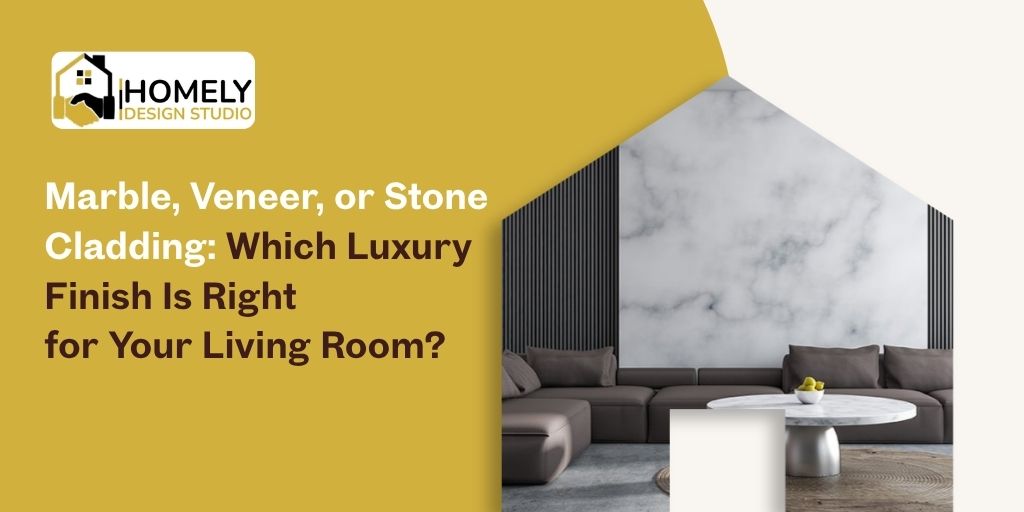
Marble, Veneer, or Stone Cladding: Which Luxury Finish Is Right for Your Living Room?
Luxury is not just about expensive materials but about selecting finishes that work together, suit the space’s proportions, and help readers create a refined, personalized atmosphere in their Mumbai apartments. For homeowners planning living room interior design in Mumbai, marble, veneer, and stone cladding are three popular choices for creating a premium look. Each offers a distinct visual language that can inspire confidence in your selection process. So, which finish is right for your home? Consider the room’s size, lighting, style preferences, and how you want the space to feel to make an informed choice. Why Material Selection Matters in a Luxury Living Room A high-end interior is rarely defined by one material alone. The strongest spaces usually combine different textures and finishes in a controlled way. Recent interiors show how stone, marble, wood, lighting, and carefully selected furniture can work together to create a sophisticated atmosphere. The material you choose for a feature wall, TV unit, flooring, console backdrop, or architectural element can influence everything around it. A dramatic marble may become the focal point, while a warm veneer can make the same room feel softer and more welcoming. Before selecting a finish, consider: The size and proportions of the room Amount of natural and artificial light Existing flooring and furniture Desired maintenance level Overall color palette Whether you want a bold or understated look How the material will work with the rest of the home A beautiful finish can lose its impact when too many competing textures are introduced. Good design is often about knowing where to stop. Marble: A Timeless Choice for Luxury Marble has long been associated with sophisticated interiors. Its natural veining gives every slab a distinctive appearance, which makes it particularly effective when the goal is to create a strong visual focal point. It can be used for flooring, TV walls, console backdrops, coffee tables, fireplace surrounds, or selected architectural details. In contemporary Mumbai residences, marble is often paired with warm wood tones, metal accents, and soft furnishings to prevent the space from feeling too cold. Why Choose Marble? Marble works especially well when you want: A sophisticated and timeless appearance A strong focal feature Natural variation and veining A refined contemporary or classic aesthetic A material that can complement neutral interiors However, more marble does not automatically mean more luxury. Covering every wall in a heavily patterned stone can make a room visually busy. A better approach is often to select one prominent area and allow the material to stand out. For luxury living room interior design, book-matched marble can create an especially dramatic effect on a feature wall. The veining is aligned across adjoining slabs to create a continuous visual pattern. Veneer: Warmth With a Sophisticated Finish If marble feels too formal or dramatic, veneer can introduce warmth while still creating a premium appearance. Wood veneer consists of thin layers of natural or engineered wood applied to a suitable substrate. It can be used across cabinetry, wall panels, TV units, storage, consoles, and other built-in elements. Veneer is particularly useful in a modern living room interior design because it works naturally with clean lines and concealed storage. It can also soften the appearance of stone, glass, or metal. A Mumbai apartment featured by Architectural Digest India, for example, combines marble with dark veneer elements, showing how contrasting materials can create depth without making the space feel disconnected. When Is Veneer the Better Choice? Choose veneer when you want: A warmer and more inviting atmosphere Wood texture without using solid timber everywhere Custom cabinetry and wall detailing A contemporary or transitional aesthetic A softer contrast against marble or stone Walnut, oak, teak-inspired, and darker wood tones can create very different moods. Lighter finishes generally make a compact room feel more open, while deeper tones can add richness to larger spaces. The key is to select the grain, color, and sheen according to the overall design rather than treating veneer as an isolated feature. Stone Cladding: Texture and Natural Character Stone cladding can give a living room a more architectural appearance. Instead of relying on polished surfaces, it introduces texture, depth, and natural variation. It can work particularly well on a feature wall, fireplace surround, TV backdrop, or structural column. Stone can also complement minimalist furniture because the surface itself provides visual interest. Mumbai interiors increasingly use natural materials and textured surfaces to create character. Recent residential projects in the city have combined stone with marble, wood, metal, and warm lighting to create refined spaces with a more tactile quality. Why Consider Stone Cladding? It can be a strong option if you want: Natural texture An earthy and sophisticated feel A dramatic feature wall A connection with organic materials A less polished alternative to marble The main consideration is scale. A heavily textured stone can dominate a compact room. In smaller Mumbai apartments, using it selectively may create more impact than covering several surfaces. Marble vs. Veneer vs. Stone Cladding There is no universal winner because each finish solves a different design requirement. Choose marble when you want elegance, visual movement, and a strong focal element. Choose veneer when warmth, cabinetry, and a comfortable contemporary atmosphere are priorities. Choose stone cladding when texture, depth, and natural character are more important than a polished appearance. The key to a luxurious space is combining materials thoughtfully. Using two or three finishes carefully can create a richer, more cohesive result that makes you feel confident in your design choices. For example, a marble feature wall can be balanced with warm veneer cabinetry, while a small stone element can introduce texture without competing with the main focal point. How to Combine These Materials Without Overdoing It? The biggest mistake with premium materials is assuming that every expensive finish needs to be visible. Luxury often becomes more convincing when materials are given enough space to breathe. A simple combination could include: Marble for one focal wall Veneer for the TV unit
